Testing Directional Overcurrent Relays
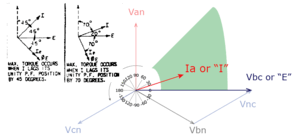
In the previous post about Directional Overcurrent relay (67) testing (Finding the Direction in Directional Overcurrent Relays), we reviewed Directional Overcurrent protection from a system perspective to enhance the descriptions in The Relay Testing Handbook: Principles and Practice. We’ll be looking at Directional Overcurrent relays from a testing perspective in
Ask Chris: What is the difference between contactors, motor starters, relays and circuit breakers?
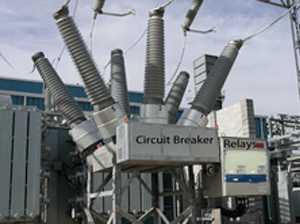
A reader submitted a question through the Ask Chris form. I’ve expanded the original question from “what are the differences between relays, contactors and motor starters?” to “What is the difference between contactors, motor starters, relays and circuit breakers?” We’ll look at the history of electrical protection in this post
CT Primary Injection Ratio Testing Problems
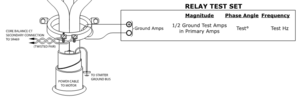
Situation after CT Primary Injection: New 230kv breaker Testing CT’s, 4000/5, by high current injection injecting 80 amps A phase to ground the secondary leads are shorted in a junction box A-B-C-N / additionally a voltage is connected to test instrument form test set The secondary readings are A = 0.096
Finding the Direction in Directional Overcurrent Relays
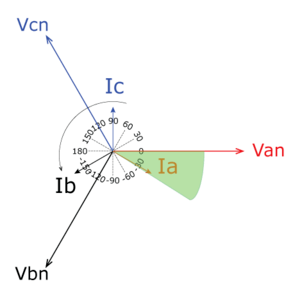
A reader recently asked a question about the forward and reverse directions described in the Directional Overcurrent Relay section of The Relay Testing Handbook series. I used electro-mechanical directional relays as an example, which may have been a mistake. Let’s take another look at the Directional Overcurrent (67) element from a
SEL-321 Out-of Step Protection Problem?
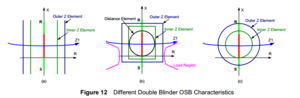
SEL 321 OSB upper tests fine, lower is no-op but 51g comes in any ideas? I’m oversight on a project, test company is using a Doble 6150 w/ RTS, I’m not very familair with RTS sdg
SEL Test Procedure Negative-Sequence Volt-Pol Directional Overcurrent Element
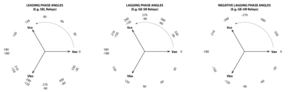
I am writing to enquire about 67N test procedures, specifically Schweitzer relays. The Page 94 of the Relay Testing Handbook #C2 : Practical Relay Testing (50/51/67/59/27/81/87/21) by Chris Werstiuk says “some relays, such as SEL models, do not have user defined characteristics and operate dynamically based on actual operating condictions”
